



 Apple Podcasts
 Spotify
 NXT
NXT
 ROH
ROH
 MLW
MLW NWA
NWA GCW
GCW HOG
HOG NJPW
NJPW AAA
AAA NOAH
NOAH CMLL
CMLL UFC
UFC Professional Fighters League
 Real American Freestyle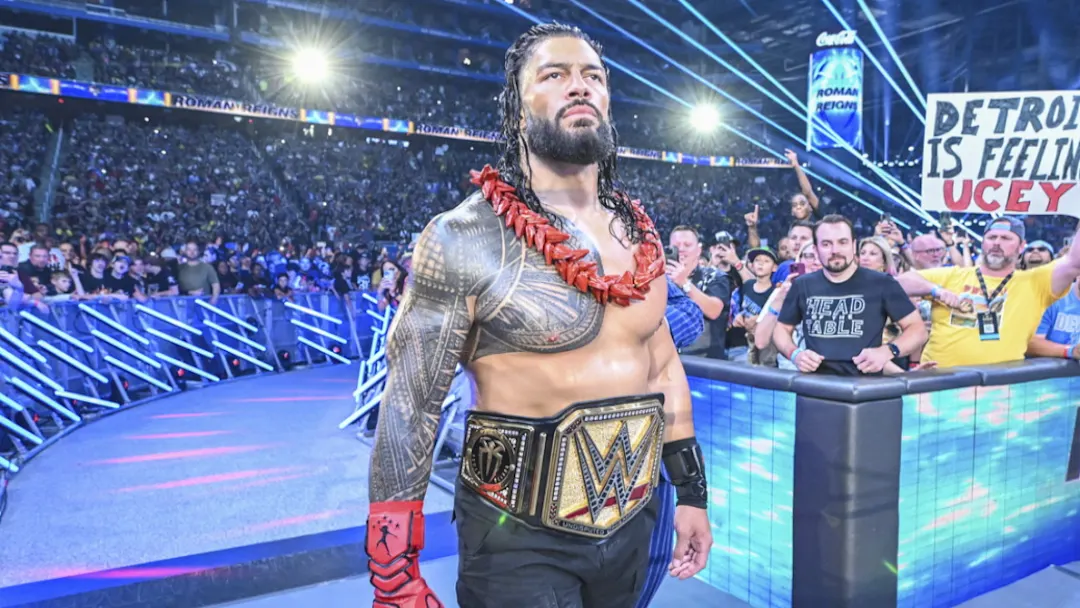

In modern professional wrestling, dominance has become the standard. For the most part, champions are no longer meant to feel vulnerable. Instead, they are often presented as unstoppable forces who hold titles for months or even years. On paper, that sounds like a return to prestige. In practice, it has created a different kind of problem. Fans seem to think a title reign is a failure if not held for a lengthy amount of time.
Long title reigns used to mean something special. They were rare and signaled that a wrestler had reached a level above everyone else. Today, they are far more common, especially at the top of the card. The question is no longer whether long reigns add value. It is whether they are starting to take something away. In WWE, it seems as if long title reigns are used as a way to re-write history. “A New Era!”
The Case for Dominance
There is a reason promotions lean into long reigns. A dominant champion can elevate a title simply by holding it. When Roman Reigns carried the top championship in WWE for an extended period, it created a sense of importance around every defense. The title felt like the center of the show.
A long reign also helps define an era. Fans can look back and associate a stretch of time with one central figure. That kind of consistency is valuable in a business that often shifts quickly. It gives viewers a clear top star and a clear goal for everyone chasing them.
There is also the argument that modern wrestling needs fewer title changes. Weekly television and constant content can make championships feel less important if they switch hands too often. A long reign can counter that by restoring the idea that winning a title is difficult.
The Predictability Problem
The downside is just as clear. When a champion holds a title for too long, outcomes start to feel obvious. Fans go into matches expecting the champion to win, not wondering if they might lose. It immediately kills curiosity. That predictability can drain tension from even the biggest matches on the card.
It also highlights how different today’s booking philosophy is compared to past eras. Some of the biggest stars in wrestling history did not need lengthy title reigns to feel important. The Rock, arguably one of the greatest to ever do it, had multiple world title runs, but many of them were relatively short. Titles changed hands more frequently, yet the championship still felt meaningful because the outcome was never guaranteed. Call me a boomer, but today’s fans would not survive the wrestling world 20 years ago.
That sense of unpredictability made every defense feel urgent. A challenger was not just filling a spot. They had a real chance. Today, a challenger might be built up for weeks only to fall short in a result that feels inevitable. Over time, that pattern can make it harder for fans to stay invested.
Collateral Damage on the Roster
Another issue is what happens to everyone else. When one wrestler sits firmly at the top for an extended period, it limits opportunities for others to break through. Challengers come and go, but few are allowed to truly rise.
In earlier eras, even short title reigns could create new stars. A wrestler might win the championship briefly and gain credibility that lasted long after the loss. Now, with fewer title changes, those moments are harder to create.
This can leave the upper midcard crowded with talent that feels stuck. They are presented as contenders, but rarely as equals. Over time, that gap becomes harder to close. One thing I would like to mention is the recent Darby Allin title reign. At the time of this editorial, Allin has had the AEW World Title for two weeks. He has already faced two “mid card” wrestlers in Tommaso Ciampa and Brody King, and given them the spot light in the main event scene, making them both feel like legit contender’s.
Finding the Balance
The solution is not to abandon long title reigns altogether. They still have a place in modern wrestling. The key is balance.
Promotions need to be willing to surprise their audience. That does not mean constant title changes, but it does mean recognizing when a moment calls for one. A well-timed switch can create excitement that carries forward.
It is also important to build multiple credible challengers at once. When more than one opponent feels like a real threat, matches become less predictable. Even a long reign can feel fresh if the outcome is not obvious.
The Bigger Picture
Professional wrestling has always been fluid. Trends rise, peak, and eventually shift. Long title reigns are currently in a dominant phase, driven by the desire to create prestige and stability.
But prestige without unpredictability can feel hollow. Dominance without risk can feel repetitive.
The challenge for promotions is not choosing between long reigns and short ones. It is making sure that no matter how long a champion holds a title, fans still believe it could end at any time.