





 Apple Podcasts
 Spotify
 NXT
NXT
 ROH
ROH
 MLW
MLW NWA
NWA GCW
GCW HOG
HOG NJPW
NJPW AAA
AAA NOAH
NOAH CMLL
CMLL UFC
UFC Professional Fighters League
 Real American Freestyle

A decision to deny credentialed media access to a major event can have ripple effects far beyond a single newsroom. That concern came into focus today when longtime combat sports journalist Andreas Hale took to social media to announce that he had been blocked from covering WrestleMania 42, despite the established relationship with WWE and its premium live event distribution partner ESPN.
WWE Blocks ESPN Reporter
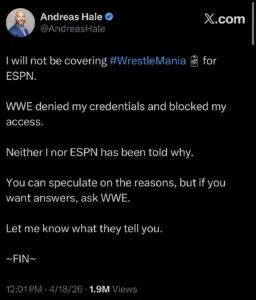
“I will not be covering WrestleMania 42 for ESPN,” Hale wrote via X. “WWE denied my credentials and blocked my access. Neither I nor ESPN has been told why. You can speculate on the reasons, but if you want answers, ask WWE. Let me know what they tell you.”
For large companies, restricting access to journalists or media outlets can undermine credibility at a time when public trust is already fragile. Access to events like WrestleMania is not simply about coverage. It is about accountability. Journalists serve as a bridge between organizations and the public, offering context, critique, and analysis. When access is selectively limited, it raises questions about whether companies are attempting to control narratives rather than engage with them.
The reported decision is particularly notable given the complicated history between WWE and ESPN. While the two entities have collaborated in various capacities, the relationship has not been without friction. In January, their business dealings were scrutinized through a class-action lawsuit alleging deceptive marketing practices tied to premium live event distribution. Though details of that case continue to develop, it has already cast a shadow over what might otherwise be seen as a standard media partnership.
Further tension has reportedly surfaced in editorial influence. ESPN was said to have adjusted aspects of its coverage, including the removal of its letter-grade review system for shows, following pressure from WWE. If accurate, such changes blur the line between editorial independence and corporate influence, a distinction that is critical in maintaining journalistic integrity.
On April 2, Hale published an article with new information regarding the WWE and Janel Grant sexual battery and trafficking allegations. One could assume WWE was not pleased with this being published on its partner’s platform.
Blocking access to a journalist like Hale amplify concerns for integrity. Established reporters bring knowledge, trust, and a track record of fair coverage. Denying them entry does not eliminate scrutiny, it often intensifies it, shifting the conversation from the event itself to questions about transparency and control.
Final Thoughts
Moments like this go beyond one reporter or one event. They show how companies handle scrutiny when it matters most. If transparency only exists when it’s convenient, trust will erode.